
 Skip to content
Home » How to Plan Outdoor Patio Heater Rentals for Fall and Winter Events
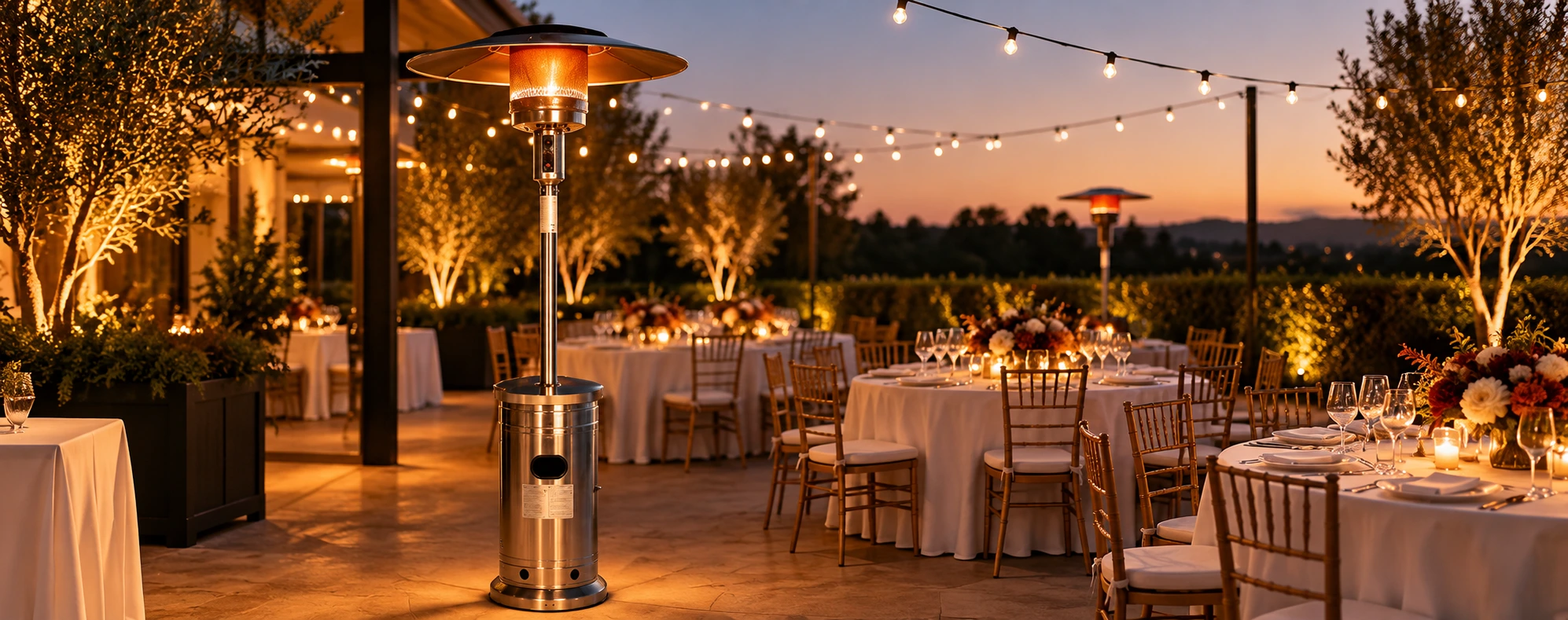
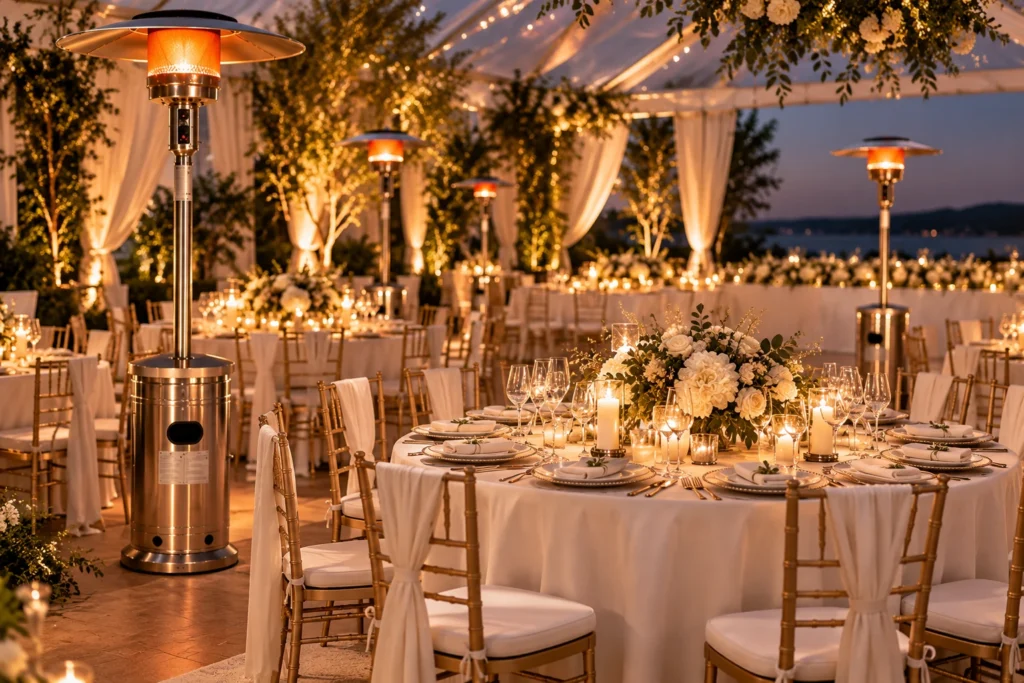
Cooler evenings don’t have to cut a fall or winter celebration short. With the right number of outdoor patio heater rentals, placed thoughtfully across a venue, guests can stay outside comfortably well into the night. Tlapazola Event Rentals supplies 7 ft 5 in stainless steel propane patio heaters, each delivered with a filled propane tank, to weddings, corporate events, and private parties across Los Angeles and the South Bay. Planning heater rentals well starts with guest count and seating layout, not a generic rule of thumb, and it also means understanding how long an event will run and what safe placement actually requires.
Heater quantity depends on guest count, seating layout, venue exposure, and event length, not a fixed formula.
Tlapazola’s 7 ft 5 in stainless steel propane heaters include a filled tank rated for an estimated 6-8 hours of use, according to the product page; actual runtime varies with weather and heater settings.
Additional 20 lb propane tanks are available to rent for events running longer than a single tank’s estimated duration.
Outdoor heaters need stable, ventilated placement with clearance from combustible materials and away from walkways and exits; standard outdoor propane heaters should never be operated inside an enclosed tent.
Confirm venue fire safety rules and ask Tlapazola about delivery, setup, and tank logistics before requesting a quote.
There’s no single ratio that works for every patio or backyard. Guest count is a starting point, but how those guests are seated and how exposed the venue is to wind and open air matter just as much. A fully enclosed courtyard holds warmth differently than a rooftop deck or an open lawn, and a venue with several seating zones, dining tables, a lounge area, a bar, may need a different approach in each one.
Weather exposure also shapes the plan. A South Bay evening with a steady onshore breeze calls for a different approach than a sheltered inland patio, which is one reason winter party heater rentals in the South Bay often need more units per guest than a comparable inland event. Rather than applying a fixed count, it helps to walk the venue (or its floor plan) and identify each area where guests will actually sit or stand for extended periods, then evaluate that area on its own for exposure and clearance.
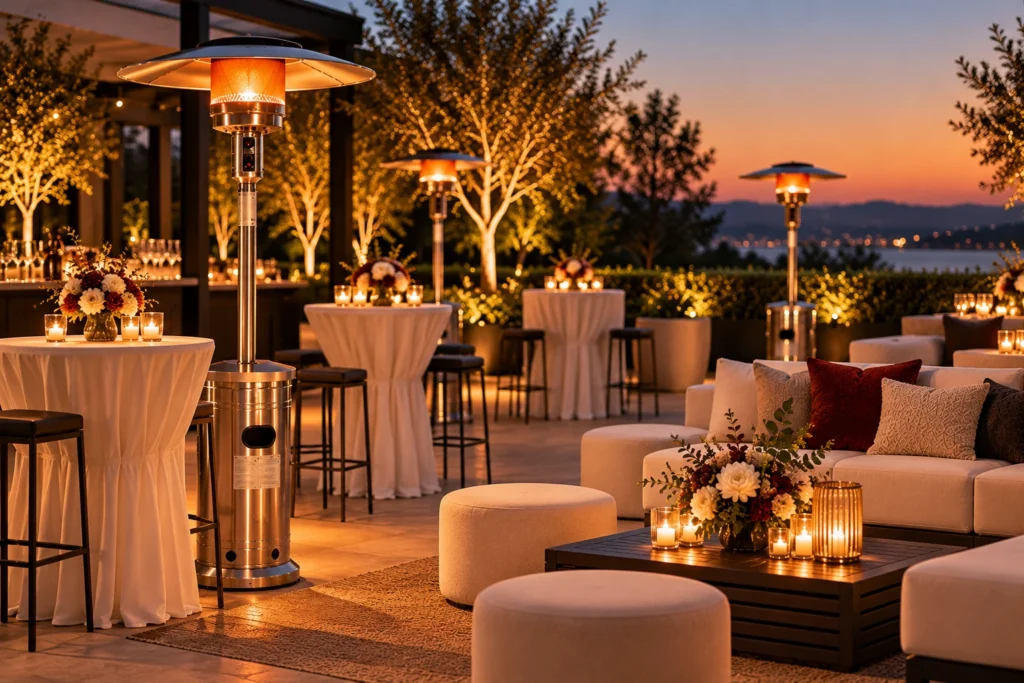
Outdoor dining events concentrate guests at tables for a defined seating period, which makes it easier to place heaters near, not between, seating clusters.
Corporate events frequently mix standing receptions with seated sessions, so heat needs to reach circulation areas without crowding walkways.
Private parties vary widely in layout; a backyard celebration may need fewer units overall but closer attention to clearance from fences, structures, and landscaping.
The outdoor patio heater rental page lists the full specifications for Tlapazola’s 7 ft 5 in stainless steel propane unit, useful for checking footprint and clearance against a specific venue before booking.
The goal is to warm the areas guests actually occupy, seating, a bar, a lounge corner, without creating a hazard. Heaters should never be placed in or near walkways, doorways, or designated exits, and each unit needs enough clear space around it to avoid contact with tablecloths, decor, or other combustible materials. They also require a stable, level outdoor surface; standard propane patio heaters are built for open-air use and are not designed for operation inside enclosed tents or fully covered structures, where ventilation is restricted.
These event heater placement tips start with mapping the venue’s fixed constraints, exits, fire lanes, combustible decor, structural clearances, before deciding where heaters go. Venue management and local fire codes may also set minimum clearances or restrict propane equipment entirely, so it’s worth confirming those rules with the venue before finalizing a layout.
Each Tlapazola heater rental includes a filled propane tank, with an estimated 6-8 hours of runtime per the product listing. That figure is a planning estimate rather than a guarantee: outdoor temperature, wind, and how high a heater is set can all shift actual runtime. Events running longer than a single tank’s estimated duration, an all-day corporate gathering, or a wedding that continues well past dinner, should plan for an additional 20 lb propane tank rental so heating doesn’t lapse partway through.
It’s worth confirming tank logistics during the quote process: how many additional tanks are available, whether swapping a tank mid-event is practical for the venue, and how far ahead tanks need to be reserved alongside the heaters themselves.
A short conversation before booking can prevent surprises on event day. Useful questions to bring to Tlapazola include:
Based on guest count and seating plan, roughly how many heaters does a venue this size typically need?
What’s the estimated propane runtime for the event’s expected length, and would additional tanks be a good idea?
Does the venue restrict propane equipment, open flame, or specific placement that should be confirmed in advance?
What delivery, setup, and breakdown options are available, and how is delivery priced from the Gardena warehouse?
What deposit and reservation timeline applies to securing heaters alongside tents and seating?
Settling these details early makes it easier to build a heating plan around the venue’s actual layout and the event’s schedule, rather than adjusting on the day itself.
The right number depends on guest count, seating layout, venue exposure, and how long the event runs, not a fixed formula. Walking the venue (or reviewing its floor plan) with Tlapazola before booking helps identify which seating zones, dining, lounge, bar, need heat and in what quantity.
Tlapazola's outdoor patio heater product page estimates 6-8 hours of runtime per included tank. This is a planning estimate, not a guarantee, since wind, temperature, and heater settings all affect actual runtime. Events running longer than that window should plan to rent an additional 20 lb propane tank.
No. Outdoor propane heaters need a stable, level surface, clearance from combustible materials, and placement that never blocks walkways or exits. They're designed for open-air use and should not be operated inside enclosed tents or fully covered structures.
Many venues set their own rules on propane equipment, open flame, and placement, and local fire safety requirements may add further restrictions. It's best to confirm these with the venue directly before finalizing a heater layout.
Have a rough guest count, seating plan, and event timeline ready, along with any venue restrictions on propane equipment. Tlapazola can then help estimate heater quantity, propane needs, and delivery logistics from its Gardena warehouse based on those details.
Heating an outdoor fall or winter event well comes down to planning around the specifics: guest count, seating layout, venue exposure, and how long the celebration runs. Rather than relying on a fixed formula, walking through the venue’s seating zones and matching heater placement to where guests will actually be, while keeping walkways, exits, and combustible materials clear, leads to a safer and more comfortable result. Confirming propane runtime expectations and any venue restrictions before booking rounds out the plan, so the only thing left on event day is enjoying the evening.